20 Pieces of Advice I’d Give My 20-Year-Old Self Now That I’m 40

Updated: Mar 30

Turning 40 has a way of clarifying things. Not in a dramatic, life altering way, but in a quieter, more foundational and authentic way. You start to see patterns more clearly, in yourself, in relationships, in what actually makes life feel good versus listening to all the noise.
You also realize how much of what you once chased was shaped by urgency, expectation, or what you thought you were supposed to be, do or want.
Forty feels less about proving yourself and more about owning your choices. Following what actually matters to you. Being yourself without apology.
With that in mind, I made a list of advice I’d give My 20-year-old self now that I’m 40. None of these ideas are groundbreaking, and many of them will probably sound familiar. But I’ve learned that understanding something and truly learning it through experience are very different things. A lot of what’s on this list might fall into that second category.
Still, if any of this helps someone shorten their learning curve, then it is worth sharing. Together, these lessons reflect a shift toward building a life that supports you, respects your capacity, and leaves room for ambition without overwhelm.
There is a lot of content here, so I have shared the quick list of all 20 tips first. Below that, you will find each life lesson expanded with more detail, personal stories, and books and resources I love and you might enjoy too.
If you find this list especially helpful, I have also packaged this short list into a PDF that you can download here, which includes a link back to this article for easy reference. Enjoy!
(Disclaimer: This post is for informational purposes only and is not a substitute for professional advice)
Advice I’d Give My 20-Year-Old Self Now That I’m 40:
Travel often. It expands empathy, creativity, and your sense of what’s possible.
The words you use to describe your life will shape the life you experience. Read that again.
The world mirrors your self-worth, so you might as well raise the bar.
Track your cycle, then plan for your energy around each phase.
Regulating your nervous system needs to be a top priority. Nothing thrives in constant survival mode.
Learn your attachment style early; becoming securely attached will improve how you choose friends, partners, and yourself.
Boundaries are essential for healthy relationships; they’re instructions for how to treat you.
Pay attention to patterns in people. Believe what you see and how you feel, and be intentional about who you keep close.
Sometimes peace comes from adjusting expectations, not trying to change people, especially when it comes to family.
Who you choose as a partner will shape your health, finances, nervous system, and future.
Let jealousy point you toward desire, not resentment.
You can’t have it all, but clarity about trade-offs can create a peace of mind with your decisions.
You don’t need to manifest harder. Instead, align your daily actions and energy with the life you say you want.
Change your patterns. Change your environment. Change your life.
Get stronger. Walk more. Eat to nourish. Ignore the noise.
Develop your nourishing skincare routine early. The payoff compounds over decades.
Invest in your appearance; not for approval, but because how you show up influences how you feel and shapes how life meets you.
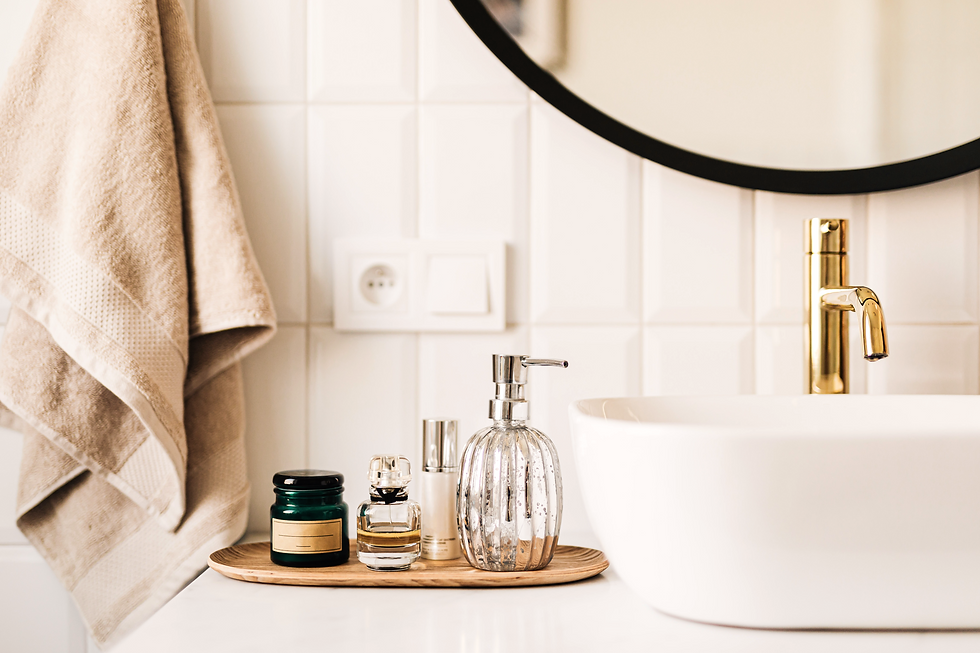
Design your home to support you. Your home environment can either dysregulate or regulate your nervous system. Let it be the latter.
Let your money work for you. Build a life where your money works in the background.
Don’t wait for milestones to celebrate. Life is the occasion!
The Detailed Version:
Travel often. It expands empathy, creativity, and your sense of what’s possible.
Travel expands your world in powerful and unexpected ways. It pulls you out of routine, exposes you to different ways of living, and reminds you that your current perspective isn’t the only one.
Even small or infrequent trips can expand how you think, spark creativity, build empathy, and help you return home with a clearer, more open view of your own life.
I grew up travelling because my dad is a pilot, and when I was young, we moved to the Middle East. I spent my childhood between Canada and the Middle East, and I’m also half British, which meant many years going back and forth to the UK. After high school, I took a gap year to live in New Zealand. I’ve lost count over time, but I’ve now been to nearly 30 countries.
Travel is the biggest day-to-day pattern interrupt I’ve experienced.
It has the ability to completely shift how you see your life, your goals, and what you believe is possible. It’s shaped the way I think, the way I relate to people, and how I choose to build my life. Travel will always be an essential part of my life, whether near or far.
The words you use to describe your life will shape the life you experience. Read that again.
The way you think and speak about yourself, your body, your life, and your circumstances doesn’t just reflect how you feel, it reinforces it.
It can be easy to brush this off as “positive thinking,” but it actually runs deeper than that.
The words you repeat, both internally and out loud with others, shape the emotions you experience and reinforce the kind of life you’re living.
I used to say things like “I’m so slow and lazy today” during certain phases of my cycle. Repeating those words, even casually, only deepened my feelings of guilt for needing to rest.
When I shifted to more supportive language, I noticed I felt far more at ease during my lower-energy days. My words literally shaped my experience, and helped to regulate my nervous system during a phase in my cycle when I really needed it.
This seems insignificant, but saying things like “I’m clumsy” or “I’m just slow” quietly become identities over time. When you choose more supportive language, you create space for different emotions, different behaviors, and ultimately, different outcomes.
Words are powerful, treat them as such.
The world mirrors your self-worth, so you might as well raise the bar.
The world doesn’t decide that you’re great. You decide that first, and over time, the world tends to reflect that belief back to you.
Self-worth isn’t built by demanding more from other people or waiting to be chosen. It’s built through the standards you set for yourself and how you choose to live and show up each day. It’s an inside job, and the world matches the energy and self-respect you consistently bring with you.
Most of us have felt this in real time. On days when you don’t feel great about yourself, when you’re off or disconnected, the day itself often feels harder. Interactions feel awkward. Small things bother you more.
That’s not insignificant. This is your internal state shaping your perception, your reactions, and your experience of the world.
The opposite is also true. When you feel grounded, confident, and at ease, when you take care of yourself, speak kindly to yourself and others, show up with intention, and take up more space, life tends to meet you differently.
It becomes a feedback loop. Not because the world magically changes, but because you do.
This doesn’t mean you won’t have hard days or that you need to fake happiness. It means raising the energetic bar of your life in ways that are real. Moving your body, dressing in a way that makes you feel good, practicing skills that build real confidence over time. No pretending. No performing.
I’ve learned that when I lead my life with confidence, self-respect, and grace, the world tends to follow suit. Not perfectly, and not always, but often enough to know it matters.
Track your cycle, then plan for your energy around each phase.
Your cycle isn’t something to push through or ignore, even though many of us were taught to do exactly that. It follows a predictable rhythm that affects your energy, focus, mood, and capacity week to week.
When you start paying attention to those shifts, you can plan your life in a way that works with your body, instead of asking it to perform the same way every day.
For years, I tried to maintain high energy through every phase of my cycle without fully respecting my hormonal transitions. In my early thirties, while navigating fertility challenges, I read Taking Charge of Your Fertility, and for the first time, my cycle actually made sense. It was information I wish I’d been taught much earlier.
Once I started tracking it, the patterns became impossible to ignore. During my higher-energy phases, I feel more confident, open, and at ease. I bring good energy into rooms, and it’s often reflected back through easy conversations and momentum.
In my lower-energy phases, I’m more sensitive, inward, and easily bothered, and even small disruptions tend to feel bigger than they are.
That awareness changed how I plan my life. When I can, I schedule demanding work, presentations, or big decisions during my higher-energy phases.
And when I feel the pull to slow down, I let myself be quieter and more inward without guilt, which is essential for me because I also have endometriosis. Respecting that ebb and flow has been a game changer for my work, my family life, and how I move through my days.
I know this relationship with my body will continue to evolve in my forties and beyond. But I also know how much easier my twenties would have been if I’d understood this sooner.
Regulating your nervous system needs to be a top priority. Nothing thrives in constant survival mode.
When your nervous system is stuck on high alert, it often shows up quietly. Decision fatigue, emotional reactivity, or the constant feeling of being “on.” Over time, living this way can make even simple things feel harder than they need to be.
Regulation is built through everyday, intentional choices. Pausing before reacting, creating predictable routines, moving your body gently, setting boundaries that protect your energy, and spending time with people who leave you feeling supported rather than drained.
These small signals of safety create space for clearer thinking, deeper connection, and a grounded sense of I’ve got this.
I didn’t understand this when I was younger. I grew up in a home that was loving, but often emotionally unpredictable. My mom had a lot on her plate, and my dad worked abroad for long stretches, and the emotional landscape of our home shifted frequently.
Because of that, my nervous system learned to stay on high alert, constantly reading the room. That stress showed up as fatigue, physical symptoms like hives, and a lingering fight or flight response that followed me into adulthood.
I didn’t get to choose my childhood environment, and while I love my parents and know they did the best they could with the tools they had, I also didn’t learn how to regulate myself within that environment.
What I do have now is awareness and choice. I can shape my surroundings, my relationships, and my responses in ways that support me.
Prioritizing my nervous system has changed everything. When my body and environment are supported, the rest of my life is easier to navigate.
Learn your attachment style early; becoming securely attached will improve how you choose friends, partners, and yourself.
Learning your attachment style early can quite literally change everything for the better, from the partners you choose to the friendships you maintain and the way you relate to and love yourself.
When you understand how you bond, react to closeness, or pull away under stress, your patterns stop feeling random or personal. You begin to see where anxiety, over-functioning, or emotional distance come from (in yourself and others), and you gain more choice in how you respond. That awareness can be so freeing.
I grew up in a loving yet emotionally inconsistent home, and without realizing it, I developed an anxious attachment style. At the time, I didn’t have the right language for it, but looking back, the framework explains so much.
I can now see how the emotional inconsistency in my upbringing taught my nervous system to stay alert and to work hard for connection, always trying to prevent unease in my life by people pleasing, being too eager, and over-accommodating.
Learning about attachment helped me understand why some relationships felt so activating while others felt grounding. It gave me language for my needs and permission to choose connections that feel steady.
Over time, this awareness has become a filter, not only for who I let into my life, but for how I show up within it. Now I move through life with more confidence, no longer driven by the need for validation.
Boundaries are essential for healthy relationships; they’re instructions for how to treat you.
Boundaries teach people how to treat you. They are built through everyday decisions: how much access you allow, what behavior you engage with, and when you choose to speak up or step back.
When boundaries are clear, relationships tend to feel calmer, more respectful, and more supportive. When they’re missing, resentment and emotional exhaustion usually aren’t far behind.
An unhealthy boundary often sounds like saying yes when you mean no, staying in conversations that leave you drained, or tolerating behavior that you later resent.
A healthy boundary looks quieter: responding instead of reacting, ending conversations sooner, naming your limits without over-explaining, or stepping back when something consistently doesn’t feel right.
This isn’t about being mean; it’s about protecting your energy.
I first learned about setting boundaries when I took a seminar on how to support loved ones through difficult seasons of their mental health journeys. It was the first time I fully recognized how boundaries could exist without losing compassion. This was before boundaries were widely discussed online, and the idea felt unfamiliar but deeply freeing.
I learned that I could say no, set expectations, and still be kind. I didn’t have to over-explain, disappear, or sever connections entirely to protect my energy.
Over time, I also realized that allowing certain relationships to naturally fade could be a healthy and respectful boundary. Most importantly, I came to understand that healthy relationships are built on clear boundaries, and that setting them is a powerful act of self-respect across all areas of life.
Pay attention to patterns in people. Believe what you see and how you feel, and be intentional about who you keep close.
The people closest to you quietly shape your life, your nervous system, and the way you move through the world. That’s why paying attention to patterns matters. Over time, those patterns shape the life you experience.
Healthy relationships will almost always include some discomfort, but they still allow for honesty, repair, and a sense of safety.
Unhealthy dynamics, on the other hand, tend to feel consistently draining or destabilizing, often repeating without meaningful change.
When people show you who they are through what they do repeatedly, the work isn’t to argue with what you see but to believe it and respond accordingly. More often than not, that response looks less like confrontation and more like adjusting expectations, access, and proximity.
This lesson didn’t come from one specific moment, but from years of watching dynamics play out across friendships and relationships of all kinds. Some have stood the test of time, others haven’t.
Looking back, I can see that I let some relationships linger longer than they should have. What I’ve learned over time is to trust my gut. If something consistently feels off, it probably is. And if it feels right, I lean into that instinct.
Sometimes peace comes from adjusting expectations, not trying to change people, especially when it comes to family.
Your family may not always meet you in the ways you hope. Adjusting expectations, rather than trying to change people or convince them to see things differently, can often be the healthiest path forward.
Families are made up of imperfect people, each shaped by their own histories, capacities, and limitations.
Most are doing the best they can with the tools they have. Holding that perspective doesn’t erase hurt or invalidate your experience, but it can help loosen the grip of unmet expectations.
There are parts of my childhood, and even adulthood, that I wish had looked different when it came to family dynamics. I hoped for more consistency, presence, validation, and emotional connection.
Over time, I’ve learned that while I don’t get to choose how others show up, I do get to choose how I respond and what I carry forward.
Sometimes that response has meant having honest, uncomfortable conversations. Other times, it’s meant quietly adjusting expectations and choosing not to revisit the past.
Letting go of who I hoped people might be, and accepting who they are, has created more space for peace. Self-awareness and self-acceptance both play important roles here too.
Reading the book The Let Them Theory by Mel Robbins has helped me work towards that shift and reinforced that not everything needs to be carried or corrected.
Who you choose as a partner will shape your health, finances, nervous system, and future.
The person you build your life with influences far more than your relationship status. They can affect your stress levels, your sense of safety, your financial reality, and the day-to-day tone of your life.
Partnership is not just about love or chemistry. It’s about how your nervous system feels around someone, how conflict is handled, and whether the life you’re building together feels supportive or draining.
There’s a saying that you’re shaped by the five people you spend the most time with. Your partner is usually at the top of that list, which means their influence on your life is significant, for better or worse.
I’ve been with my husband since I was 21, and we got married when I was 28. At that age, I didn’t fully grasp how much a partnership can shape your future. Over time, and through a lot of intentional work together, we’ve learned how much growth, reflection, and effort it takes to build a life that truly supports both of us in meaningful ways.
Let jealousy point you toward desire, not resentment.
Jealousy isn’t a character flaw or something to be embarrassed by. It’s often a signal. When it shows up, it usually points to something you want, value, or wish you had more of in your own life.
The trouble begins when that signal turns outward into comparison, gossip, or resentment, instead of being used as information.
A full life, especially one grounded in purpose and meaningful contribution, naturally leaves less room to track what everyone else is doing.
When your focus is anchored in what you’re building, jealousy loses its grip and becomes something you can learn from rather than something that distracts you.
When I used to feel that initial “oh, that must be nice” or “I wish I had that,” I learned to take it as a cue to look inward.
Instead of sitting in jealousy, I ask myself what it’s pointing to. Sometimes it’s a desire to create something similar in my own life. Sometimes it’s a reminder to create I’m craving: more connection, more generosity, more presence.
And sometimes it’s simply something I can genuinely appreciate for someone else, which now becomes “that’s so nice, I’m happy for them,” and then I let it go.
Either way, it stops draining my energy and starts guiding it.
You can’t have it all, but clarity about trade-offs can create a peace of mind with your decisions.
Every season of life comes with choices, and choosing one path often means opting out of another. Peace comes from being honest about those trade-offs rather than avoiding them.
When you’re clear about what you’re prioritizing right now, decisions feel lighter. Expectations soften. You stop measuring your life against timelines or standards that don’t fit your current reality.
Life is made up of both big decisions and small ones. Choices about marriage, home ownership, children, or building a business, alongside everyday decisions like what to eat for dinner. Each choice you make shapes the life you’re living.
Moving forward with fewer regrets often comes from looking at your options fully and making decisions that you can stand behind, even when they aren’t easy.
I learned this most clearly during a period of fertility challenges. My husband and I had to make choices that carried real emotional and physical weight.
Would we go to a fertility clinic? We did. Would we pursue IVF? We did. And would I do it again if the first round didn’t work? I decided I wouldn’t, and I found peace in that decision.
When the first round did work and Emma arrived, I felt relief not just in the outcome, but in knowing I had already made peace with every possible outcome. That clarity didn’t remove the difficulty of the process, but it gave me comfort in choosing the path forward.
You don’t need to manifest harder. Instead, align your daily actions and energy with the life you say you want.
Turning a vision into reality isn’t about wishful thinking. It’s about working with how your brain actually functions. Writing goals down gives them clarity and priority. Saying them out loud daily strengthens belief and commitment. Combining the above with visual cues like vision boards keep intentions top of mind, helping your brain notice opportunities and choices that align with what you want.
When intention is paired with emotion, momentum builds. When it’s backed by consistent action, even small steps each day, your brain wires those choices into your new normal, shifting your identity along the way.
Alignment happens when your thoughts, goals, energy, and daily actions point in the same direction. That’s when dreams stop feeling abstract and start becoming something you’re actively moving toward.
I lived this firsthand when I decided in 2013 that I wanted to become a blogger.
At the time, I didn’t even know what I wanted to write about. It wasn’t until 2018 that the vision fully took shape and I launched a blog. But day by day, I gathered ideas and inspiration. I wrote them down, created a vision board on Pinterest, talked about my goals and ideas with my husband, sister, and closest friends, made action items and set deadlines, and most importantly, followed through.
Once I found a clear direction, I studied people who were succeeding in that space. I read books and blogs, reviewed content, and started living the life I wanted to write about. Then I began creating content on Instagram. Then I started blogging.
Over time, that alignment led to a book deal, collaborations with over 100 brands, celebrity followers and shout-outs, and a career as a content creator.
It didn’t happen overnight, but each step built on the last. The process worked because I stayed engaged with it, and I was passionate about pursuing my dreams with unwavering conviction.
Change your patterns. Change your environment. Change your life.
When you change the patterns you move through each day or the environment you’re operating in, life starts to respond differently.
Real change doesn’t usually come from willpower alone. It comes from making supportive behaviors easier and unhelpful ones less convenient. When your surroundings and routines agree with what you’re trying to build, momentum follows, often faster than you expect.
Want better habits? Make them easier, like leaving your floss beside your toothbrush. Want to let go of unhelpful ones? Make them harder, like not keeping certain treats in the house.
I used to believe it was my fault when I struggled with habit change.
Over time, I realized I was working against my biology instead of with it. My brain wants things to be easy and conserve energy, so creating ease makes change far more doable.
For example, I knew I’d forget to take vitamin D if it required extra effort. Once I placed it beside the tea in my cupboard, something I enjoy every morning, the habit became automatic. I take it daily now without needing to think about it or force it.
You’re rarely stuck. With a few intentional edits, life can look very different over time. And reading the book Atomic Habits by James Clear may help you along the way, too.
Get stronger. Walk more. Eat to nourish. Ignore the noise.
Physical strength and nourishing food create a foundation that supports you for the long term. Strength builds confidence, resilience, and longevity, while eating to nourish helps stabilize energy and mood.
Trends come and go, but building a strong body, walking more, and choosing food that supports you most of the time makes daily life feel easier. When food and movement work with your life instead of competing for attention, everything else benefits.
I grew up in an era when being skinny was the ideal, and mainstream media wasn’t nearly as body inclusive as it is today. And while building strength may be more popular now than it once was, among women in particular, I’m so glad it is.
Strength and cardiovascular fitness are closely linked to longevity and metabolic health, especially when paired with nourishing food.
I’m not an expert in this space, but I’ve been learning a lot from Dr. Vonda Wright. She appears on many mainstream podcasts, and her work focuses on strength, mobility, and aging well, particularly for women. I’m looking forward to reading her books and continuing to learn from her perspective.
These days I build strength with longevity in mind. I want to move well, stay capable, and feel confident in my body as I age. The aesthetic changes are a bonus, but they’re no longer the only goal. When I focus on getting stronger and eating to support my body, everything else tends to fall into place naturally.
Develop your nourishing skincare routine early. The payoff compounds over decades.
By the time you reach your forties, you can often tell who has cared for their skin consistently over the years. Not because their skin looks “perfect” or wrinkle-free, but because it looks supported.
Daily SPF, gentle cleansing, regular moisture, hydration, and avoiding constant stripping or over-treating all compounds over time.
Caring for your skin isn’t about chasing trends or expensive products. It’s about protecting your skin barrier, keeping it nourished, and letting time work in your favor rather than against it.
Other habits like not smoking, sleeping well, exercising and eating nourishing food also play an important role in long-term skin health.
I’m grateful I grew up in a household where SPF was prioritized, and because of my rosacea, a dermatologist recommended that I wear SPF on my face daily, which I’ve done since my twenties. I don’t have a complicated, expensive, or even “perfect” skincare routine, but I do make the effort to follow these basics consistently.
Invest in your appearance; not for approval, but because how you show up influences how you feel and shapes how life meets you.
How you show up visually influences how you feel and how you move through your day.
Feeling put together can create a sense of ease and confidence before you even leave the house. And whether we like it or not, there’s also a practical reality to it. People who present themselves in a more polished way are often perceived as more competent and may be taken more seriously in professional and social settings.
Attention to appearance is often read as a signal of self-respect, self-regulation, and reliability. Fair or not, these impressions are formed quickly, shaping how others listen, trust, and engage with us, often before a single word is spoken.
Beauty isn’t frivolous or “extra”. It’s also nervous system support. When your environment and personal rituals feel considered and pleasing, your body becomes more relaxed. You show up more regulated, more present, and better prepared for each day. It’s part of the foundation that allows everything else in your life to function more smoothly.
Investing in your appearance isn’t about approval or unrealistic standards. It’s about self-respect and showing up intentionally so your appearance supports you. I think most of us know this intuitively, even if we don’t always act on it.
For me, that means leaving the house feeling put together and comfortable enough to bump into anyone I know or meet new people without hesitation.
Design your home to support you. Your home environment can either dysregulate or regulate your nervous system. Let it be the latter.
Your home isn’t just a backdrop to your life. It actively shapes how you feel, think, and move through your days.
Light, layout, noise, clutter, and functionality all send constant signals to your nervous system. When your space is designed to support you, rather than overwhelm you or impress others, it can help you feel calmer, more grounded, and better able to handle daily life. Over time, those small environmental cues add up in powerful ways.
I discovered this firsthand when my husband and I moved into our first home together shortly after we got married. I quickly realized I had brought more stuff than we had space for, and it was creating a lot of stress for me.
Once I took the time to declutter and organize, everything shifted for the better. That was also when I discovered minimalism and adopted the “less is more” and “quality over quantity” mindset.
While I’m not as minimalist as I once was, that lens has stayed with me and continues to shape how I look after my home and my life.
Let your money work for you. Build a life where your money works in the background.
Money is a tool, and most of us aren’t taught how to use it well when we’re younger.
When money sits still, it usually requires more effort from you over time. When it’s put to work thoughtfully, it can support your life in the background.
Learning how to save, invest, and think long term isn’t about becoming obsessed with money. It’s about creating more stability, choice, and ease, so your energy can be spent on the parts of life that matter most to you.
Some money books that have shaped how I think about money include The Psychology of Money by Morgan Housel, Secrets of the Millionaire Mind by T. Harv Eker, We Should All Be Millionaires by Rachel Rodgers, and Rich Dad, Poor Dad by Robert Kiysaki, and You Are a Badass at Making Money by Jen Sincero.
I wish I had learned more about money in my twenties. Most of my real education came in my thirties, and I’m excited to keep expanding that knowledge in my forties.
My husband and I currently invest in real estate, stocks, index funds and managed portfolios. In the decades ahead, I want to deepen my understanding of alternative investing strategies.
Don’t wait for milestones to celebrate. Life is the occasion!
Joy doesn’t have to be earned through big moments or special occasions. When celebration is postponed for milestones, everyday life can start to feel like something to get through rather than something to enjoy.
Small rituals, using the special plates, lighting the candle, wearing the dress, and getting friends or family together, turn ordinary days into something more intentional.
Caring for everyday moments isn’t indulgent. It’s a way of enjoying your life as it’s happening.
I’m pretty sure Instagram influenced me on this one. As I move through my forties, I know I’ll be making my life the occasion more often than not!
Final Thoughts
A curated life isn’t static, it evolves as you do, with intention instead of guilt.
Looking back, what stands out most isn’t any single achievement or milestone. It’s the consistent choices that compounded over time. The ways I learned to listen to my body, protect my energy, invest in what truly matters, and let go of what didn’t. The realization that a good life isn’t built through constant striving, but through alignment, intention, and care.
If there’s one thing I know now, it’s that you’re allowed to build a life where you change your mind, raise your standards, and evolve beyond who you once were. And you don’t have to wait for the “right” moment to start.
Life is happening now. You might as well meet it with presence, confidence, and joy!